Luvinci
July 19, 2026
First Day of Kindergarten: Tips for a Smooth Start (Free Countdown Checklist)
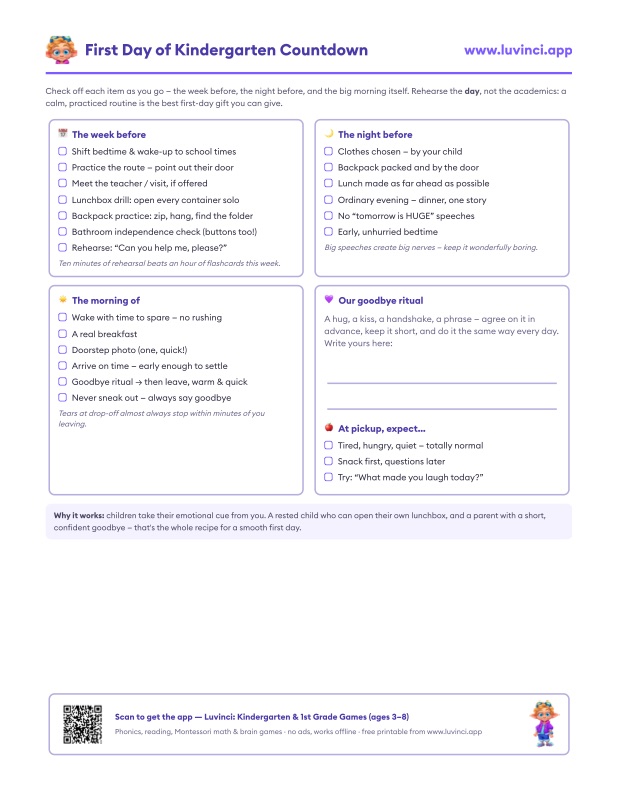
Free printable · PDF · 481 KB
First Day of Kindergarten: Tips for a Smooth Start (Free Countdown Checklist)
No signup needed. Just print it.
Download PDFThe best first day of kindergarten tips all come down to one idea: rehearse the day, not the academics. Shift bedtime a week early, practice the lunchbox and backpack until they’re boring, agree on a short goodbye ritual, and leave drop-off quickly and warmly. Children take their emotional cue from you — a calm, confident goodbye tells them school is a safe place to be.
We’ve folded all of it into a free printable countdown checklist — the week before, the night before, and the morning of, one page for the fridge. No signup.
The week before: reset the routine
Kindergarten mornings fail at 7 a.m., not 9 a.m. About a week out, move bedtime and wake-up to school-schedule times so the first morning isn’t a shock. Do a practice run of the route — walk or drive to the school, point out the door your child will use, and play on the playground if it’s open. Familiar beats exciting.
If your school offers a meet-the-teacher day or classroom visit, go. A teacher who is a familiar face on day one removes the biggest unknown of all.
This is also the week to stop worrying about letters and numbers. If you’ve been following a summer prep plan, the academic work is done; whatever your child knows now is what they’ll bring, and it’s enough — here’s what teachers actually expect on day one.
Practice the day, not the alphabet
The skills that make the first week feel good aren’t academic:
- The lunchbox drill. Pack lunch in the real lunchbox and have your child open every container, zipper and wrapper themselves. Swap anything they can’t open alone.
- The backpack. Zipping it, hanging it by the loop, finding the folder inside.
- Bathroom independence — including buttons and hand-washing, without being reminded.
- Asking a grown-up for help. Practice the sentence: “Can you help me, please?” Children who can say it out loud use it.
Ten minutes of this kind of rehearsal beats an hour of flashcards in the final week.
The night before: lay everything out
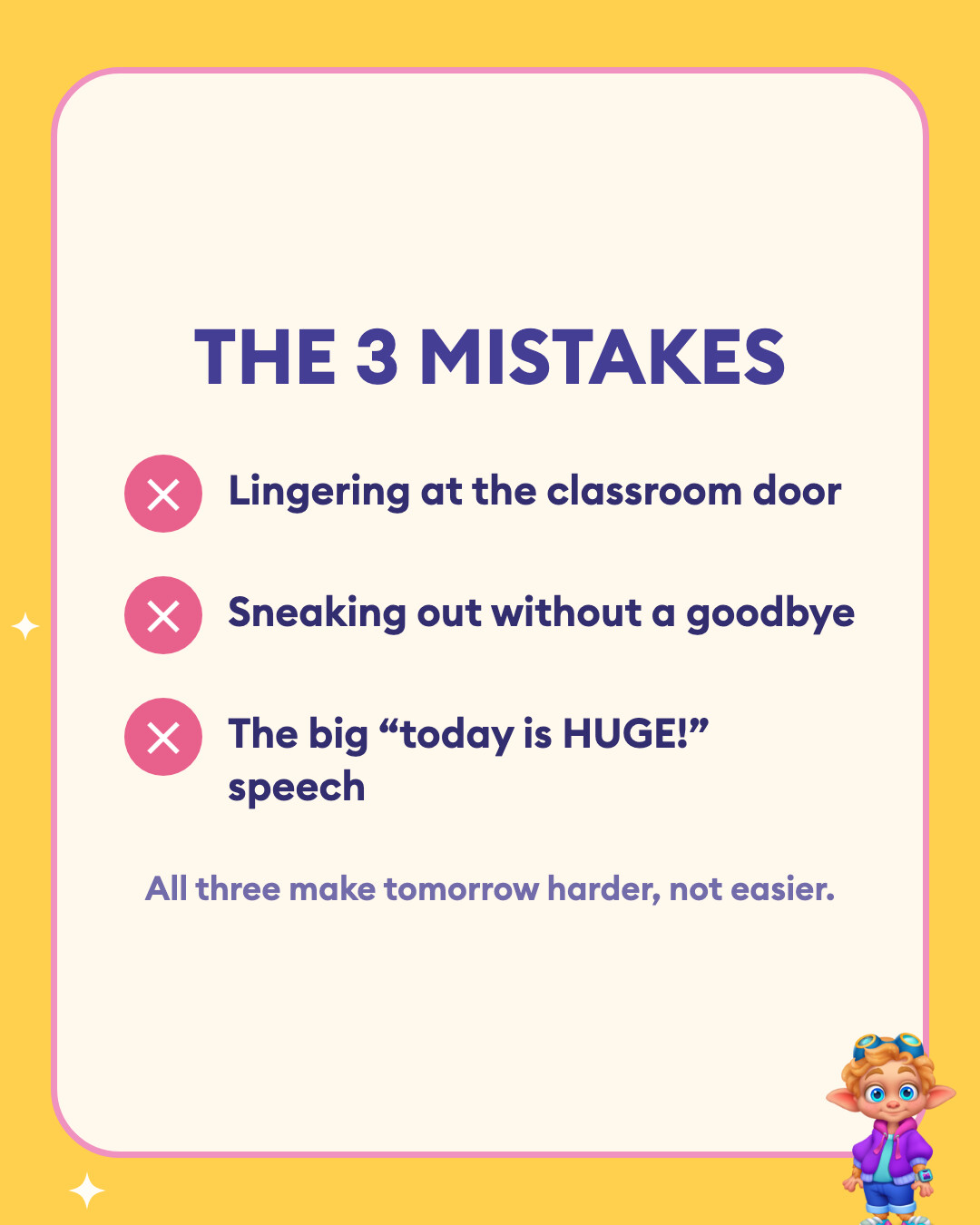
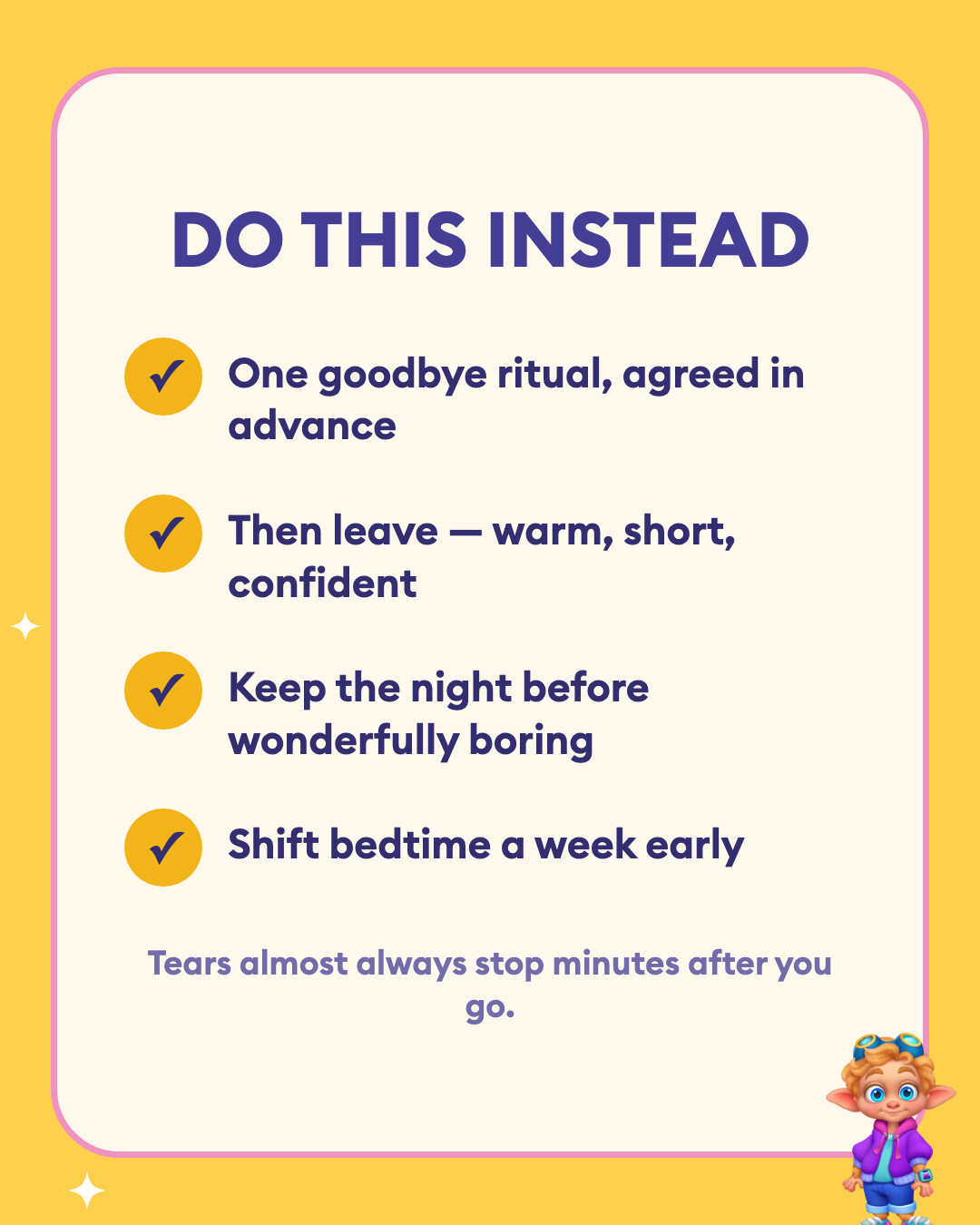
Clothes chosen — by your child, even if the combination is creative — backpack packed and by the door, lunch prepped ahead as much as possible, and an early night. Keep the evening ordinary: a normal dinner, one story, no big “tomorrow is a HUGE day” speech. Big speeches create big nerves.
Drop-off: short, warm, confident
This is the moment parents worry about most, so here is the script teachers recommend:
- One goodbye ritual, agreed in advance — a hug and a kiss, a special handshake, “I love you, have fun, I’ll be back.”
- Then leave. Lingering tells your child there’s something to be worried about. A quick goodbye is a confident goodbye.
- Never sneak out. It saves one hard moment now and buys weeks of clingier goodbyes, because now you might vanish at any time.
If there are tears, know this: they almost always stop within minutes of you leaving, and the teacher has seen it a hundred times. Tears at drop-off are a normal part of social and emotional readiness, not a sign your child isn’t ready.
Pickup: expect tired, hungry and quiet
The most common first-day surprise isn’t tears in the morning — it’s a grumpy, monosyllabic child at pickup. A first day of kindergarten burns enormous energy. Bring a snack, skip the interrogation, and trade “How was school?” (answer: “fine”) for openers that actually work: “What made you laugh today?” “Who did you sit next to at lunch?” “Show me something you learned.”
Then keep the evening light. Early dinner, early bed — the first-week tiredness is real and usually lasts a couple of weeks.
“The reading section made a big difference for my daughter who just started kindergarten.” — timkrasniy, App Store review (US)
Once school starts, home learning works best as a gentle sidekick: a story at bedtime, ten minutes of letter-sound games on a quiet afternoon — support, not a second school day.
First-day FAQ
What if my child cries at drop-off? Hand them to the teacher, finish your goodbye ritual, and go. Crying typically stops within minutes; staying longer almost always makes it longer. If it’s still intense after a few weeks, talk to the teacher — together you can adjust the routine.
What if I cry? Outside, freely. At the classroom door, save it — your calm face is the information your child uses. (Then join the other parents doing exactly the same thing in the parking lot.)
Should I stay and watch through the window? If your child can see you, you’re still there — the goodbye hasn’t finished. Trust the teacher and give the classroom a chance to work its magic.
How much sleep does a kindergartner need? Most five-year-olds need 10–13 hours. Count backwards from the school wake-up time and you’ll usually land on a bedtime earlier than the summer one — hence the week-early reset.
The takeaways
- Print the countdown checklist — week before, night before, morning of
- Reset bedtime a week early — mornings are where first days wobble
- Rehearse lunchbox, backpack, bathroom — the real day-one curriculum
- One warm goodbye ritual, then leave — never linger, never sneak out
- Expect a tired, hungry child at pickup — snack first, questions later
Teachers and school communities: you’re welcome to print and share the checklist freely — a link back to this page is appreciated.