Luvinci
November 11, 2026
Letter Recognition Worksheets: Free Find the Letter Pages (PDF)
6 free PDFs in this post
Letter practice
Next steps, writing and sounds
Letter recognition means seeing a letter and knowing which one it is, in capitals and lowercase, even next to a look-alike. Our free letter recognition worksheets give every letter its own find the letter page, A to Z.
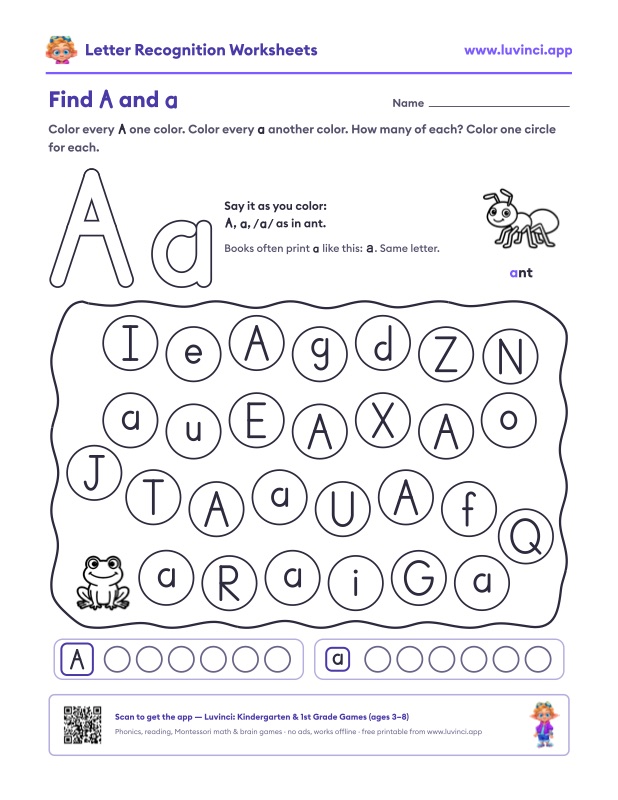
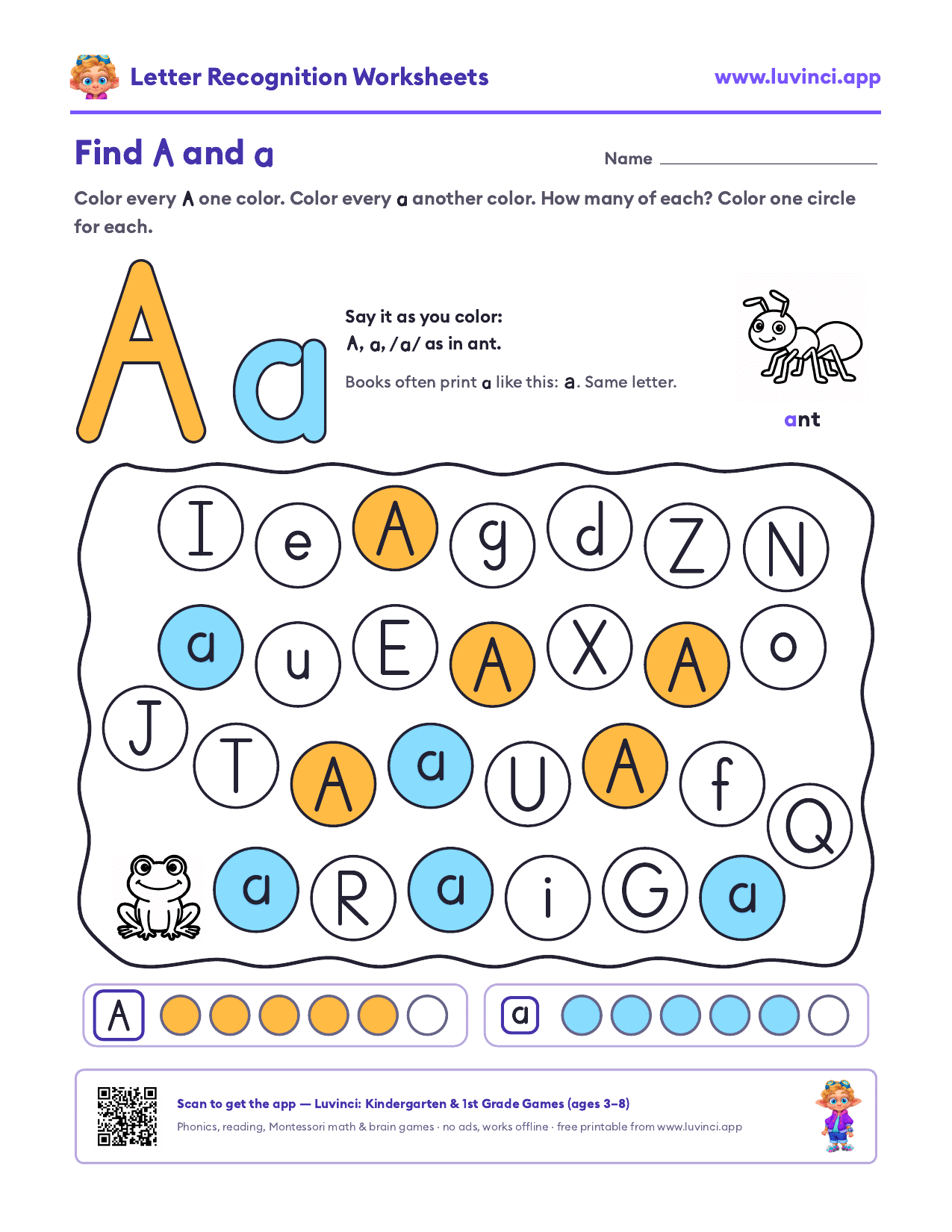
Find every A and every a. Color the capitals one color and the lowercase letters another. Then count each kind.
You’ll find an A to Z chart and an answer key at the back of these alphabet worksheets. The look-alike letter sort and the quick letter check each live in their own PDF. The letter recognition printables are free. No signup, no email.
Pre-K and kindergarten kids can use the pages. They also work as review in 1st grade.
Jump to: the worksheets · how to use them · the quick letter check · names and sounds · look-alikes · matching cards · activities · FAQ
Free letter recognition worksheets A to Z (PDF)
One letter fills each page, capital and lowercase together. These letter identification worksheets double as alphabet recognition worksheets. Each has a big letter pair to color, a key picture or word, and a scene packed with letter circles.
- Pages 1 to 26: find the letter, A to Z.
- Page 27: the A to Z chart.
- Page 28: the answer key.
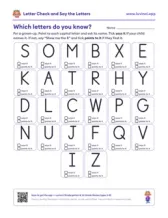
The “Say the letters” grids in our letter check PDF are for letter naming fluency. Go slowly. This is practice, not a race.
Preschool letter recognition worksheets can start with the letters in your child’s name. Letter recognition worksheets for kindergarten can run through A to Z. The matching cards are a separate PDF too.
Printing tips:
- Black and white is fine. A crayon, marker or dauber works on the circles.
- Laminate the say the letters grids and the cards if you can.
How to use these find the letter worksheets
Plan on about five minutes for each find the letter page. Here, /a/ means the sound, as at the start of ant.
- Point to the big pair and say the name and the sound. “A, a, /a/.”
- Pick two colors, one for capitals and one for lowercase.
- Your child colors every capital A, then every a, saying the name and the sound each time.
- Count each kind by coloring one circle at the bottom for each letter.
- Check with the answer key on the last page.
On some pages, like C, O and S, capital and lowercase share a shape. Size is the cue there. Color every big C one color and every small c another.
As they color, saying the name and the sound turns a finding game into a naming game. Both matter.
A lot of books draw a and g another way. Both shapes sit on the a and g pages, so your child can tell they are the same letter.
Which letters does your child know? A quick letter check
Find out which letters your child already knows before you print all 26 pages.
- Use our free letter check. The letters are out of order on purpose.
- Point to each letter and ask, “What letter is this?” Tick “says it” if your child names it.
- For a letter they cannot name, say “Show me the B.” Tick “points to it” if they find it.
- Skip the rest without a fuss. Check again in a few weeks.
It is easier to point to a letter than to say its name. A child who can point but can’t name it yet has made real progress.
Work on a few letters, mixed with ones your child already knows. Letters from their name are a good place to begin. Then add letters whose names hold their sound, like t, s, m, f and b. Keep b, d, p and q apart until one of them is solid. For which sounds to teach first, see our order to teach letter sounds.
Some schools time letter naming in kindergarten. Treat it as a quick check. It is not something to drill at home.
Letter recognition and phonics go together
Letter recognition belongs with phonics. It doesn’t have to come first. To teach letter recognition, give your child both the name and the sound of each letter.
Many children learn both when they say the name and the sound together. The sound is what your child uses to read words. That is why each page asks for both.
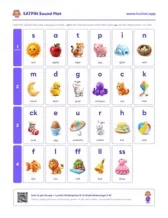
For the listening side, try these phonemic awareness activities. Once letters and sounds are known, build words with letter tiles.
Knowing letters early predicts easier reading later. Worksheets alone do not make a reader. Reading together and sound games do the rest.
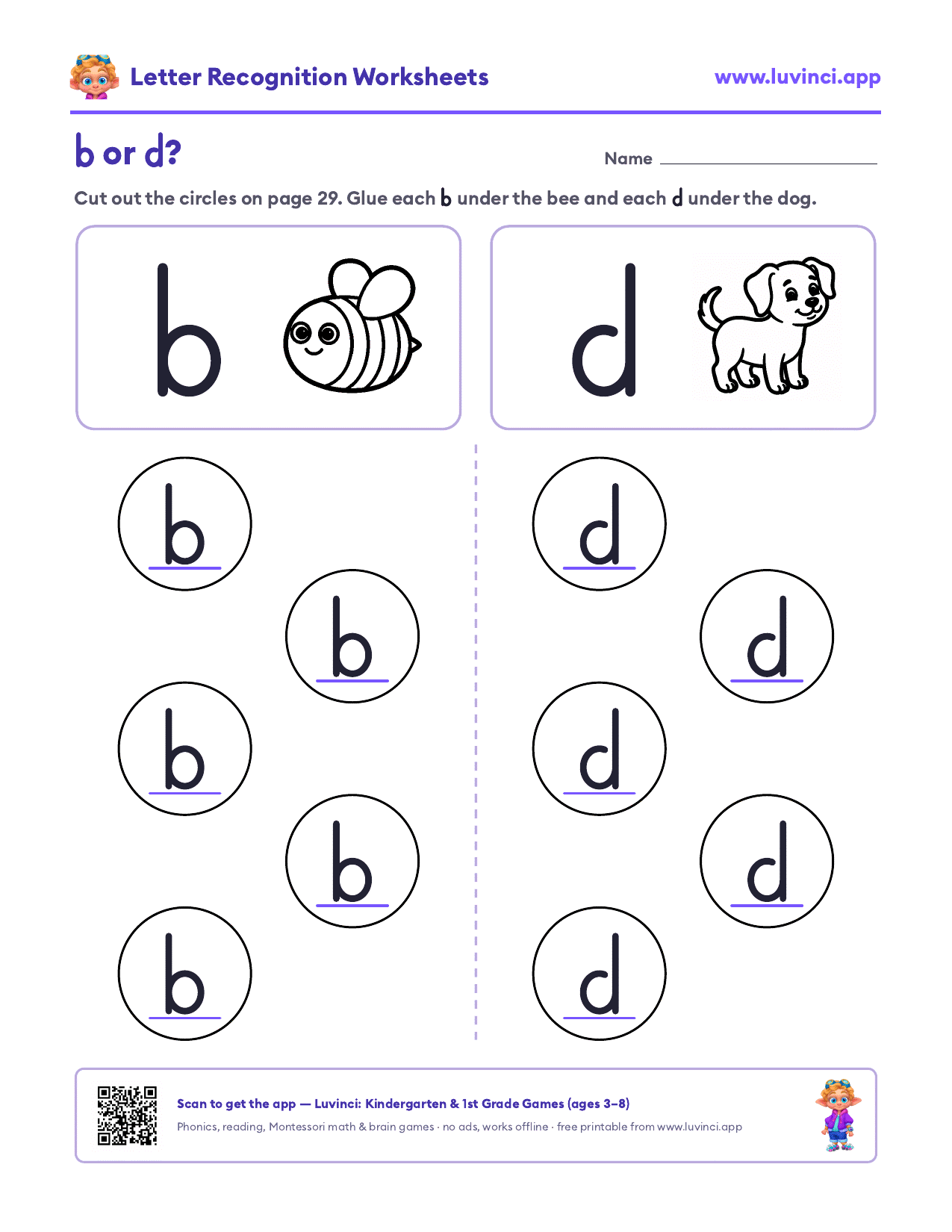
Look-alike letters: why b and d share a page
A few look-alike letters hide on every page on purpose. On the A page, the a sits among d, g, o and e. That is the practice.
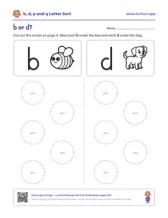
Mixing up b and d, or p and q, is normal in pre-K and kindergarten. Our free b, d, p and q letter sort has a cut and paste sort for each pair, and the round pieces sit on their own sheet.
A side-by-side sort makes your child look at which way the round part faces.
We explain why kids write letters backwards in more detail. If it still happens a lot by the end of 2nd grade, mention it to the teacher.
Uppercase and lowercase letter matching cards
A matching game shows your child that B and b are the same letter.
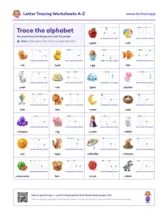
Teach both together. Lowercase gets the most practice, because it is what your child reads. Our letter tracing worksheets explain why.
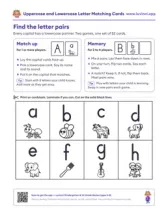
Our uppercase and lowercase letter matching cards have 52 cards, one for every capital and lowercase letter. Most lowercase cards have a small picture.
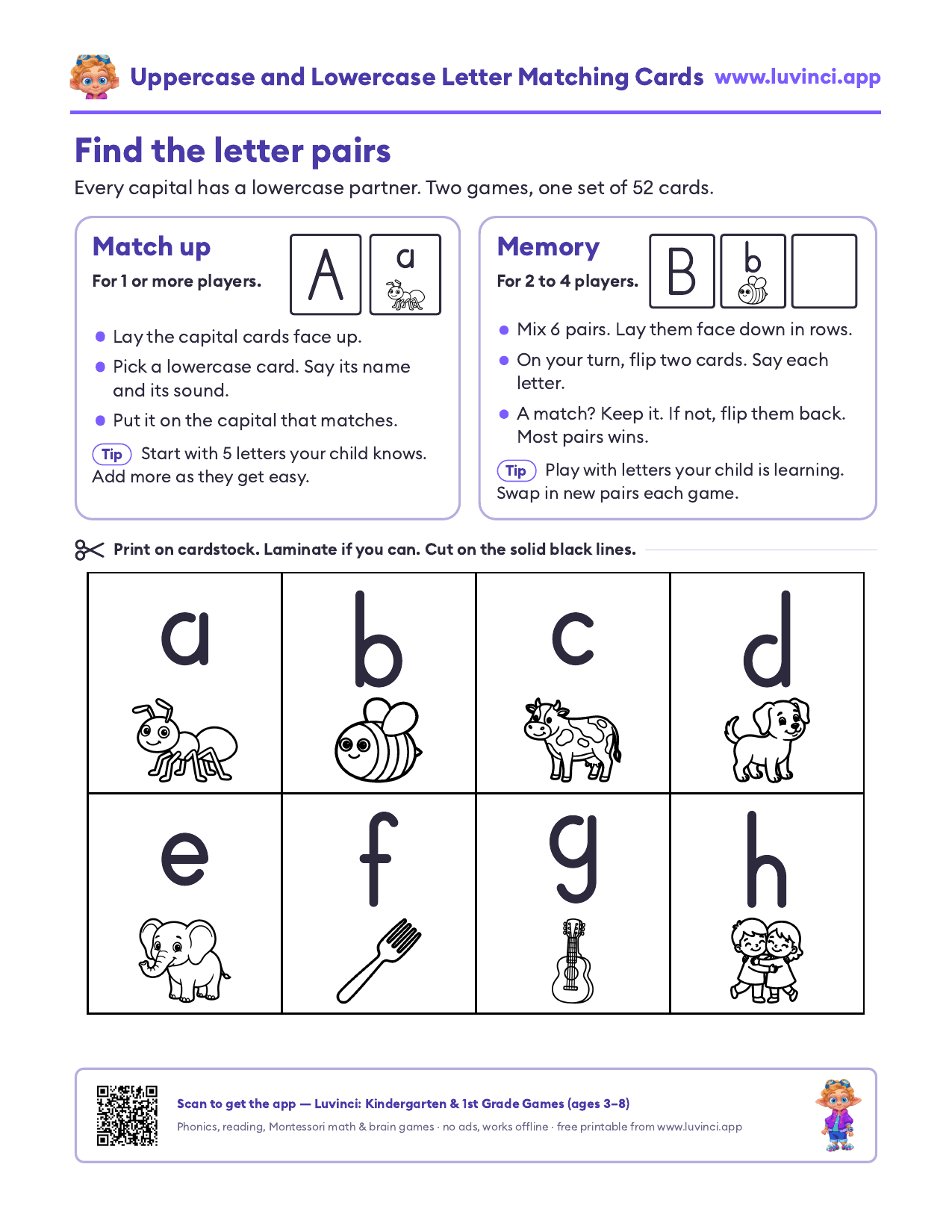
Page 1 has the rules for two letter matching games. Uppercase lowercase matching works best as a game.
- Match up. Spread the capital cards face up. Hand your child one lowercase card at a time. They say its name and its sound, then lay it on its capital.
- Memory. Lay the cards face down. Turn over two. Keep them if they are a capital and its lowercase partner.
Begin with 5 or 6 pairs, not all 26.
Letter recognition activities to try at home
A few short, playful sessions a week beat one long one.
- Name letters first. Find the letters of your child’s name on cereal boxes and signs. Our guide to teaching your child to write their name has more ideas.
- Letter hunt. Pick one letter and hunt for it in a picture book.
- I spy a letter. “I spy a b on that sign.”
- Sort the shapes. Sort magnetic letters into straight and curvy.
- Cover the letter. Call a letter. Your child covers it on the chart page with a small toy or a cereal piece.
- Card games. Use the matching cards for Memory or Go Fish.
For preschoolers, keep to a few letters. In kindergarten, work toward all 26. In 1st grade, review any letters that are still hard. Letter recognition games on a tablet are fine as extra practice.
In December, our Christmas worksheets for kindergarten have a tree letter find. The Christmas worksheets for preschool have a same letter stockings page.
FAQ
At what age should my child be able to recognize letters?
Plenty of 3-year-olds know a few letters, often from their name. One large study suggests about 18 capitals and 15 lowercase letters by the end of pre-K as a rough guide. By the end of kindergarten, most schools expect all 26. Every child moves at their own pace. If you’re worried, ask the teacher. Our kindergarten readiness checklist covers the other skills.
What is letter recognition in kindergarten?
In kindergarten, letter recognition means knowing all 26 letters, capital and lowercase, on sight. Kids also learn the main sound of each letter in the same year.
What is the fastest way to teach letter recognition?
Short, daily practice with the name and the sound together. Begin with your child’s name letters. Add a new letter every day or two, with lots of review. That works better than one letter a week.
Why can’t my child remember the alphabet?
The ABC song is not the same as knowing each letter. Look-alikes and the middle of the alphabet take longer. Return to a few letters at a time and mix known ones with new ones.
The takeaways
- Letter recognition is knowing a letter on sight, in capitals and lowercase.
- Say the name and the sound together.
- Begin with the letters in your child’s name.
- Look-alikes are normal and get their own practice.
- Print the free letter recognition worksheets, no email needed.
Our reading games sound out each letter as your child taps it, which is fine as extra practice. These pages stay screen-free, so you can use them anywhere.
Sources
- National Early Literacy Panel (2008). Developing Early Literacy: Report of the National Early Literacy Panel. National Institute for Literacy.
- Piasta, S. B. and Wagner, R. K. (2010). Developing early literacy skills: A meta-analysis of alphabet learning and instruction. Reading Research Quarterly 45(1), 8-38.
- Piasta, S. B., Petscher, Y. and Justice, L. M. (2012). How many letters should preschoolers in public programs know? The diagnostic efficiency of various preschool letter-naming benchmarks for predicting first-grade literacy achievement. Journal of Educational Psychology 104(4), 945-958.
- Turnbull, K. L. P., Bowles, R. P., Skibbe, L. E., Justice, L. M. and Wiggins, A. K. (2010). Theoretical explanations for preschoolers’ lowercase alphabet knowledge. Journal of Speech, Language, and Hearing Research 53(6), 1757-1768.
- Treiman, R. and Broderick, V. (1998). What’s in a name: Children’s knowledge about the letters in their own names. Journal of Experimental Child Psychology 70(2), 97-116.
- Demchak, A. N. and Solari, E. (2025). Brick by Brick: Insights on Alphabet Instruction From Research. The Reading League.
- Texas Education Agency (2022). Texas Prekindergarten Guidelines, PK4.
- Common Core State Standards. Reading: Foundational Skills, Kindergarten.
- McBride, C. and Schumaker, J. (2025). The ABCs of learning the ABCs. Purdue University College of Education.
- Understood.org. FAQs about reversing letters, writing letters backwards and dyslexia.